It Has To Be Fuji

Well folks, I have finally made up my mind. Fuji or Nikon, there can be only one (not really; I have done both for the past 8 months, but we need to make this as dramatic as possible to retain your interest for a few more minutes).

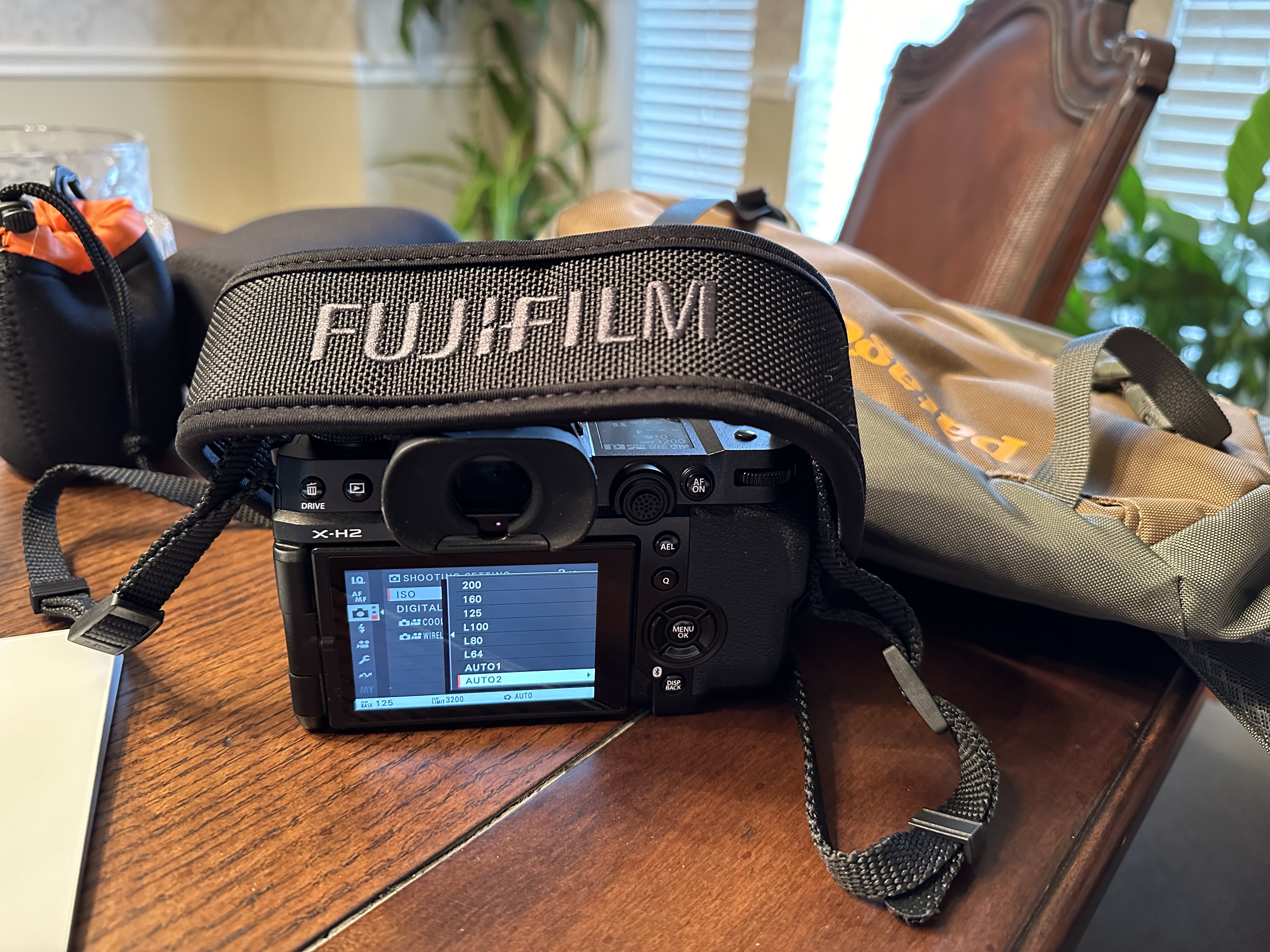
Having the X-H2 in my grubby little paws for the past week and half, all I can say is, wow! Did NOT expect to love it as much as I do, but here we are. The thing I thought I loved about the Fuji X system was the retro styling, and as a side benefit, the dials on top were / are an excellent learning tool for someone attempting to master the craft of camera photography at a more involved level.

This and all images in this post shot with iPhone 14 Pro Max unless otherwise attributed

Now that I get it though, I don’t need to be able to see and rotate the dials on the top to achieve my desired results. And something else that I knew but didn’t fully realize about the X-H2 was how incredibly useful the LCD on the top is.

It is always on (pretty sure you can turn it off in settings, but I love that is always on and it doesn’t affect the battery to an extent that affects my usage), and it is actually easier to check everything at an effortless glance than studying the teeny tiny numbers on top of the dials of the X-T-whatever (I have the X-T20 and the X-T3). And if I want to change any of them, then yes, the dials take less thought, but it is quite easy on the X-H2 as well. You can either roll the front or rear dial, depending on which setting you are changing, or just quickly hit the Menu and do something like this: go to the Camera icon, scroll down to ISO (I often have ISO set automatically) and change it there to whatever you like – OR, you can set the ISO to Auto1, Auto2, or Auto3, where you can have presets (for instance, Default Sensitivity of 125, Max . Sensitivity of 3200, and Min. Shutter Speed of Auto). You can set those 3 Autos to whatever you like, then quickly select whichever one suits your current purpose.
This is not to convince you, dear reader, of the merits of modern or retro styling. To each their own. It is simply to say that for me, with two feet already in Camp Fuji from May 2018 through May 2023, then one (maybe one and a half) in Fort Nikon for the past 8 months, the time has come to fully commit. And with Nikon gear-selling quote from MPB firmly in hand, I will be selling off the Z6 II, the 24-120 S f/4, and the Tamron 70-300.

Surprisingly, going off of strictly memory of past quotes from MPB, I’m pretty sure the Z6 II has gone down by a hundred bucks or so, while the 24-120 lens has actually gone up from last time I checked. This does make logical sense though, if one were to ascribe it to the new Nikon ZF’s arrival on the scene last year driving down the price of older cameras while increasing demand for better glass by those who have purchased the latest and greatest camera offering. It is Nikon’s attempt to more fully engage with the retro phenomenon so thoroughly dominated by Fuji, complete with top dials, and is by all accounts a major success for them, both in terms of sales as well as being a winner of a photo and video maker.
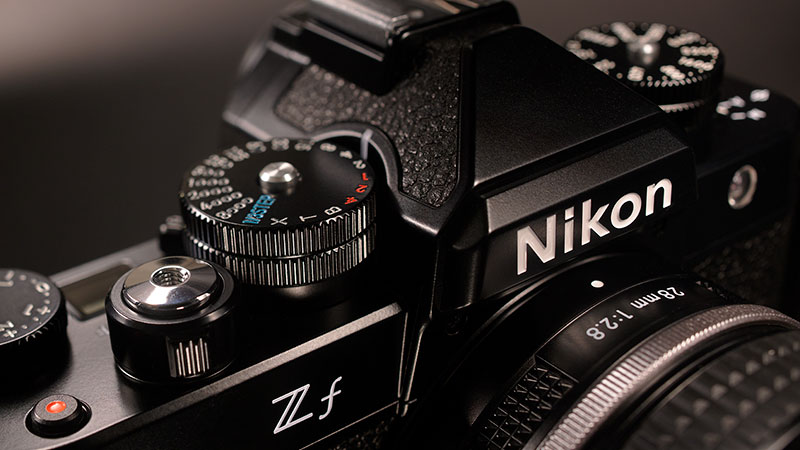
Courtesy of DP Review

Don’t think I haven’t been tempted! Indeed I have, particularly for the much-improved autofocusing capabilities that vault it not only beyond the Z6 II (which is not the greatest, but plenty good for my usage) but also beyond the Fujifilm X-H2 that I have added to the stable. I had been even more tempted by the soon-to-be-announced Z6 III though, whose ergonomics I would prefer over the new ZF; additionally, the Z6 III should be a purely technological advancement, rather than a styling + [some] technology leap forward, but I know that it will cost a fair bit more than what I am looking at spending, and that I would likely not be able to justify that kind of pricey upgrade from the Z6 II for quite some time.

That’s not what made my decision though; in fact, it really wasn’t much of a consideration at all. The simple fact of the matter is something that I have known about myself for going on 6 years now: I am a Fuji man. I just love their stuff. I love how metal and solid it feels. I love how much image quality they pack into their bodies and (I suppose more importantly for me) lenses. I love their kaizen philosophy and practice, literally improving products that you already own via free software updates that actually make a difference in the thing. And the familiarity that I have with operating their system means something, has value. I’m all in.

Listen, you can’t go wrong with Nikon. You can’t go wrong with Sony, or Canon, or Panasonic. These cameras and lenses take impossibly fantastic images with incredibly little effort, and if you are inclined to really work on your craft, learn about light, composition, focal lengths, compression; familiarize yourself with all of the buttons and dials and switches and menus; get out to amazing places, or simply out on the street or over to the park – it just levels up from there. I am still on that path, taking that journey, and enjoying it beyond any reasonable right to such things. Fortunately, Fujifilm is right there with me, every step of the way.
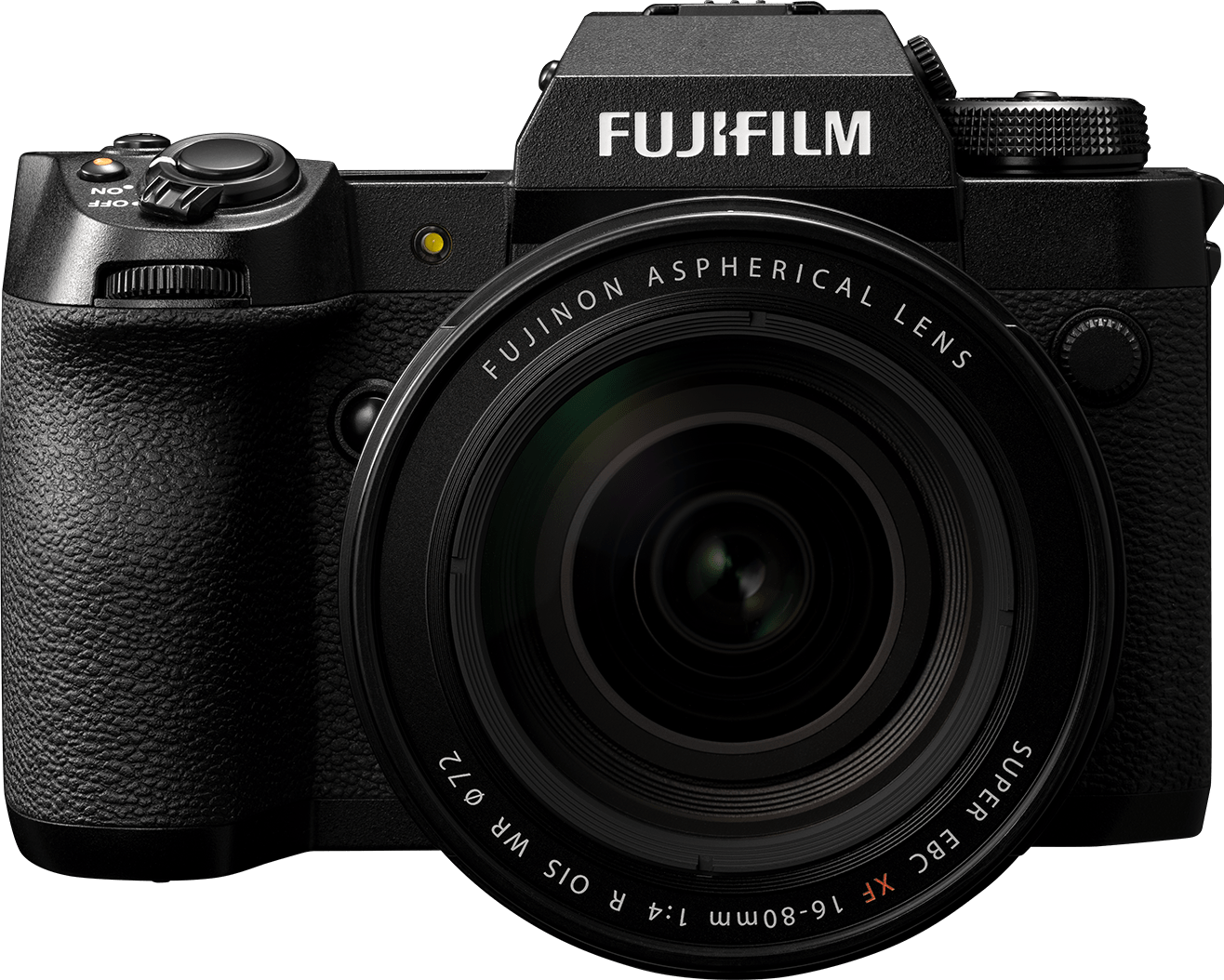
Courtesy of Fujifilm / Tom Hegen

Fuji or Nikon – or Both?

Shot with Z6 II and Nikkor Z 24-120mm f/4

Without going too far into the image by image, blow by blow of how we got here, I find myself immersed in both the Fuji X and the Nikon Z systems. This is a journey that started over 10 years ago with a Nikon DSLR kit from Costco, then 5 years later a heavily researched upgrade to mirrorless APS-C in May 2018 (commencing with a Fuji X-T20 and 18-55 kit), followed 5 years after that in May 2023 with a painstakingly detailed hands on trial of both the Fuji X-T5 and a Nikon Z6 II full frame mirrorless with the 24-70 F4 S kit (which I actually returned in favor of the more expensive, razor sharp, extraordinarily versatile “one lens to rule them all” 24-120 F4 S that was on sale for a couple hundred dollars off).

In the meantime, I had added to my Fuji kit back in summer 2022 with a used X-T3, a new 23mm F1.4 (the latest version, not the old one), and prior to that had added a manual Rokinon 12mm F2 and a used XF 55-200 variable aperture (which, if I’m being honest, almost single-handedly keeps Fuji in the discussion as I have gone back and forth between selling off all of my Fuji kit or keeping it). I also added a used XF 35mm F2 back in early 2022, before I got the used X-T3.

So if you’re still with me, you very likely know something about the Fuji X system, either from direct experience or interest/fascination from afar. It is, for me, a system no less capable of eliciting fan loyalty than anything from Apple or Tesla, whether merited or not. In the case of what Fuji has produced over the course of their X line of APS-C cameras and lenses, it is absolutely deserved. Which is exactly my problem.

You see, the thing is, it is not legitimately arguable that the full frame Nikon Z system, with the cameras and glass produced by Nikon, is capable of “better” image quality than Fuji’s or anyone else’s APS-C systems. It’s simple physics: bigger sensors and bigger glass = more light to work with, and coupled with Nikon’s decades of optics expertise, better image potential. And I do see that in practice, along with the equally indisputable autofocus speed and accuracy advantage of the Nikon Z full frame system over the Fuji X APS-C system. It is just noticeably easier and faster to get a good, sometimes very good, shot. And much more difficult to miss a shot entirely due to low light or being out of focus. Even the F4 zoom lens is phenomenal in less than ideal conditions. Not to mention my recent trial of 2 non-S Nikon Z lenses, the 28mm 2.8 and the 40mm F2, which are flat out RIDICULOUS in terms of their performance regardless of available light, be it low or ample.

What I had hoped to find with my initial full frame dabbling last May was a clear and obvious improvement over the results from the X-T3. And I did see that, particularly in less than ideal lighting conditions. I thought it could have possibly been attributed to not only the full frame sensor, but also the IBIS of the Nikon Z6 II, which the Fuji X-T3 does not have. Naturally, in an effort to preserve my collection of Fuji X glass, I also tried out an X-T5, which was supposed to have tremendous IBIS. But unbeknownst to me at the time (very early May 2023), the still new X-T5 had some known autofocus issues, which would be completely obliterated with a firmware update later that month (after I returned the camera). Had I tried out the X-T5 WITH that update, I may never have decided to go with the Z6 II. In fact, I almost decided not to go with Nikon despite the autofocus issues of the early X-T5 when I took out the Fuji 55-200 to an early evening outdoor music fest in Fort Worth – for Fuji X aficionados, you may recall that this is a lens with OIS, and it absolutely nailed every shot, near and far. The detail it captures and the colors it renders, from any distance, is just hard to believe, especially for a variable aperture telephoto zoom, and as mentioned earlier, single-handedly prevented me from selling off my entire Fuji kit once the decision to go with the Nikon Z was made.

Eight months later, I still own everything I’ve purchased for each system (I added a Tamron 70-300 for the Nikon Z last summer and although I can’t say that its performance is better than the Fuji 55-200 on the Fuji X system, the fact that it is even in the conversation is the highest praise I can give it). I want to buy more for the Nikon, a prime, which is why I’m evaluating the 28 2.8 and the 40 2. I did try out the 50mm 1.8 S when I initially evaluated the Z6 II last May, as it seems to blow the minds of all who review it, but found that the 24-120 F4 S was so crazy good that I could not envision actually packing up that large prime glass often enough to justify its acquisition (the full frame system is just bulkier to pack up and transport than the X gear, so I often only go with the body and the 24-120 that rarely leaves it, as was the case with a trip to Europe last August). However, what these 2.8 and 2.0 primes promise are low (enough) light performance in a pancake profile, as compared to the bulkier 1.8 S primes. Perfect for street or indoors. And I have to say, especially in the case of the 40 F2, they absolutely deliver on that promise.

Shot with X-T3 and 23mm f/1.4 R LM WR

What to do, then? I have a used X-H2 on the way from MPB. I’ll try it out and either pay to ship it back, or keep it and sell the X-T20 and the X-T3 back to MPB to defray some of the cost. It is not an X-T camera, so I cannot yet say what I will think about the controls, the ergonomics. But if it performs significantly better than the X-T3 in low light (I hate to keep carrying on about low light, but I really do quite a bit of shooting inside of museums and old, REALLY old, churches, when I can get to them, not to mention indoor nighttime family shots around the holidays each year), which I am quite certain it will, then I will once again have a decision to make: Fuji, Nikon, or both? I would hate to take the financial hit on selling off my Nikon kit less than a year after purchasing, and I am also embarrassingly intrigued by the new Nikon ZF as well as the upcoming Z6 III. Which makes me lean towards keeping the Z system, at least for now.

The inconvenient truth is, I love both systems; yet when I review images after shoots with one or the other, I am typically treated by the X-T20 (which I admittedly pull out on only the rarest of occasions now) and the X-T3 with quite a few keepers that I instantly fall in love with and share with others, along with a smattering of “what the heck happened with those?” throw aways; with the Nikon shoots, practically every image is solid, usable, good to very good. No extreme loves, and no obvious throw aways. Is this why “pros” are more likely to shoot Nikon, because they are just really unlikely to come away with bad shots? I hate to use words like “sterile” or “clinical,” but those certainly come to mind when I review my Z images. I can give them a bit more of a wow factor in Lightroom, but what’s the fun in that when I can plug my SD card reader straight into the iPhone or iPad, review the JPEGs straight out of camera, and fire them off to whoever needs (as determined by my own impatience to share) to see them in that very moment?

Thank you all for helping me work through this. At the end of the day, “Fuji, Nikon – or both?” seems as far away from resolving as it ever has. And I kind of love that.

REAL Cameras

Source: https://fujifilm-x.com/global/products/cameras/x-h2s/gallery/

No offense, Apple. Or Google. Or any other smartphone maker.

But you are not going to be able to do this with your phone. At least not in the next several years, maybe longer.

The zoom alone is simply not possible with smartphone glass (i.e., the lenses on the phones). Computational photography only takes you so far, and optical zoom is something that requires more than an algorithm can produce. Will phones get there, eventually? I mean, I don’t see it, but when you throw the most brilliant minds and hundreds of billions of dollars at something, it seems that almost anything is possible.

The phone camera wars continue to rage, but in the meantime, I’m thankful for companies like Fujifilm and their astounding camera and lens technologies. I’ve been a proud, passionate owner of a Fujifilm X-T20 since 2018, slowly building up a small stable of lenses, and yesterday they absolutely annihilated the state of the art in the APS-C camera world with the unveiling of their new, flagship X-H2S (a mouthful, I know). Here’s an honest review by someone infinitely more qualified than myself, so you don’t have to take my word for it.

It’s pricey, sure. At $2499 for the body only, it’s far more than most would ever spend on a camera. However, like a pricey, spec’d out Mac Studio ($7999 if you take it all the way to 11), when you need something that will do what that incredible thing will do, you know you’re going to have to spend money for quality. And like an Apple Pro Display XDR, even though it is VERY expensive, it is actually a relative bargain when put up against other things that can achieve similar results.

Well done, Fujifilm.