Well folks, I have finally made up my mind. Fuji or Nikon, there can be only one (not really; I have done both for the past 8 months, but we need to make this as dramatic as possible to retain your interest for a few more minutes).
Having the X-H2 in my grubby little paws for the past week and half, all I can say is, wow! Did NOT expect to love it as much as I do, but here we are. The thing I thought I loved about the Fuji X system was the retro styling, and as a side benefit, the dials on top were / are an excellent learning tool for someone attempting to master the craft of camera photography at a more involved level.

This and all images in this post shot with iPhone 14 Pro Max unless otherwise attributed
Now that I get it though, I don’t need to be able to see and rotate the dials on the top to achieve my desired results. And something else that I knew but didn’t fully realize about the X-H2 was how incredibly useful the LCD on the top is.

It is always on (pretty sure you can turn it off in settings, but I love that is always on and it doesn’t affect the battery to an extent that affects my usage), and it is actually easier to check everything at an effortless glance than studying the teeny tiny numbers on top of the dials of the X-T-whatever (I have the X-T20 and the X-T3). And if I want to change any of them, then yes, the dials take less thought, but it is quite easy on the X-H2 as well. You can either roll the front or rear dial, depending on which setting you are changing, or just quickly hit the Menu and do something like this: go to the Camera icon, scroll down to ISO (I often have ISO set automatically) and change it there to whatever you like – OR, you can set the ISO to Auto1, Auto2, or Auto3, where you can have presets (for instance, Default Sensitivity of 125, Max . Sensitivity of 3200, and Min. Shutter Speed of Auto). You can set those 3 Autos to whatever you like, then quickly select whichever one suits your current purpose.
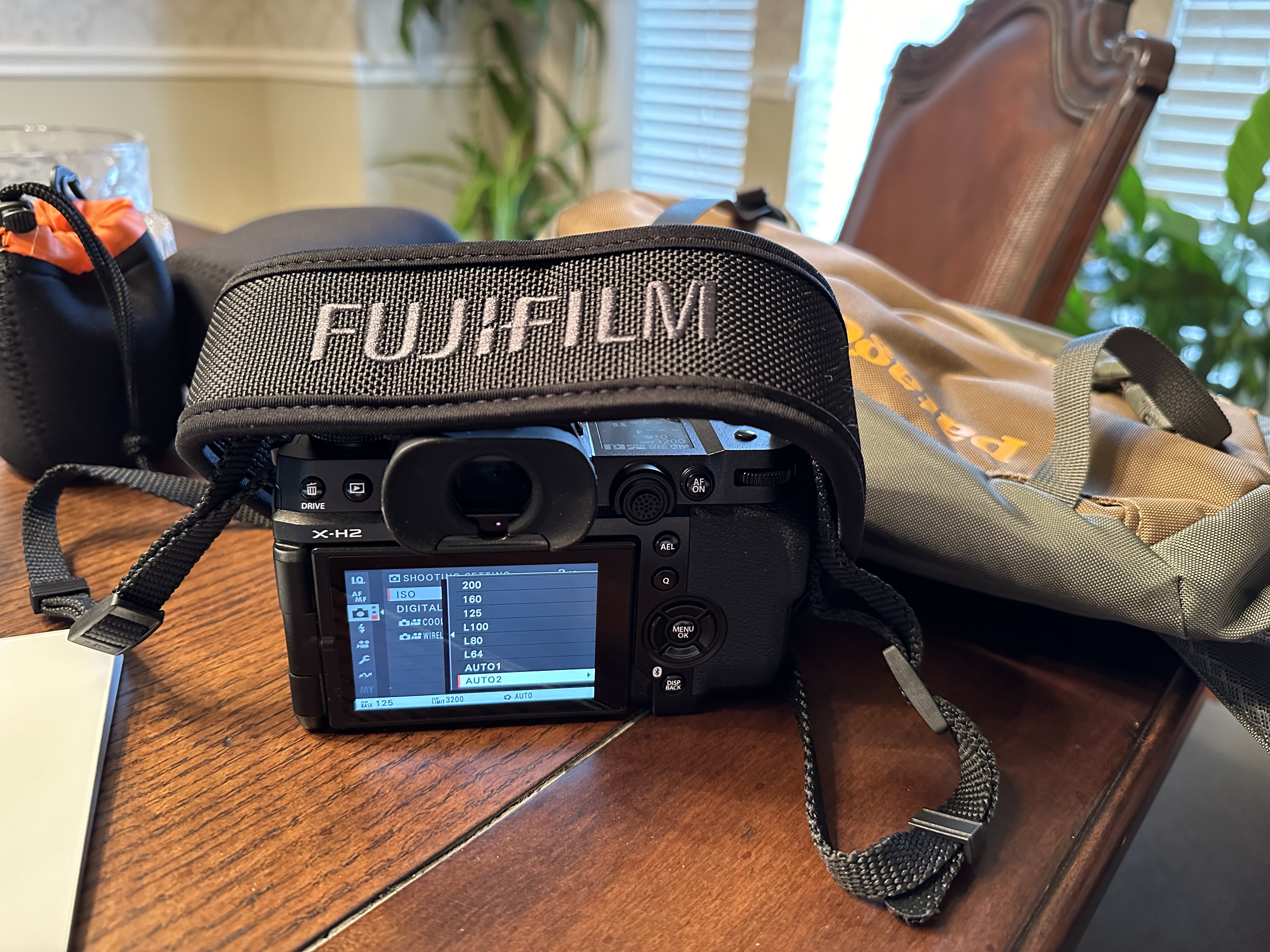

This is not to convince you, dear reader, of the merits of modern or retro styling. To each their own. It is simply to say that for me, with two feet already in Camp Fuji from May 2018 through May 2023, then one (maybe one and a half) in Fort Nikon for the past 8 months, the time has come to fully commit. And with Nikon gear-selling quote from MPB firmly in hand, I will be selling off the Z6 II, the 24-120 S f/4, and the Tamron 70-300.
Surprisingly, going off of strictly memory of past quotes from MPB, I’m pretty sure the Z6 II has gone down by a hundred bucks or so, while the 24-120 lens has actually gone up from last time I checked. This does make logical sense though, if one were to ascribe it to the new Nikon ZF’s arrival on the scene last year driving down the price of older cameras while increasing demand for better glass by those who have purchased the latest and greatest camera offering. It is Nikon’s attempt to more fully engage with the retro phenomenon so thoroughly dominated by Fuji, complete with top dials, and is by all accounts a major success for them, both in terms of sales as well as being a winner of a photo and video maker.
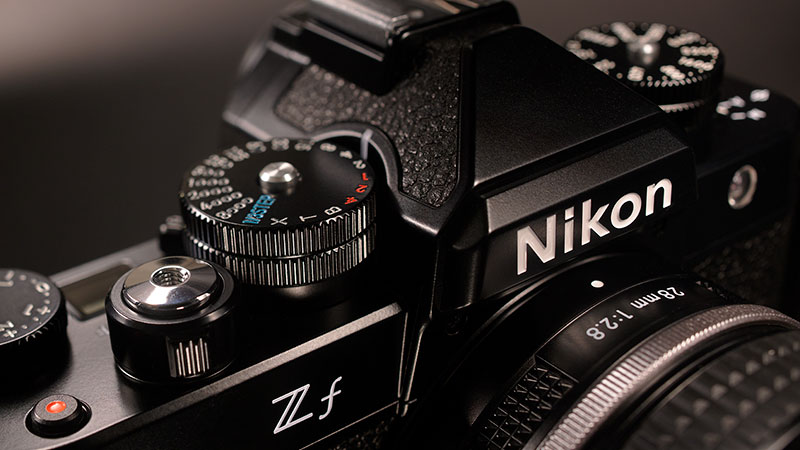
Don’t think I haven’t been tempted! Indeed I have, particularly for the much-improved autofocusing capabilities that vault it not only beyond the Z6 II (which is not the greatest, but plenty good for my usage) but also beyond the Fujifilm X-H2 that I have added to the stable. I had been even more tempted by the soon-to-be-announced Z6 III though, whose ergonomics I would prefer over the new ZF; additionally, the Z6 III should be a purely technological advancement, rather than a styling + [some] technology leap forward, but I know that it will cost a fair bit more than what I am looking at spending, and that I would likely not be able to justify that kind of pricey upgrade from the Z6 II for quite some time.
That’s not what made my decision though; in fact, it really wasn’t much of a consideration at all. The simple fact of the matter is something that I have known about myself for going on 6 years now: I am a Fuji man. I just love their stuff. I love how metal and solid it feels. I love how much image quality they pack into their bodies and (I suppose more importantly for me) lenses. I love their kaizen philosophy and practice, literally improving products that you already own via free software updates that actually make a difference in the thing. And the familiarity that I have with operating their system means something, has value. I’m all in.
Listen, you can’t go wrong with Nikon. You can’t go wrong with Sony, or Canon, or Panasonic. These cameras and lenses take impossibly fantastic images with incredibly little effort, and if you are inclined to really work on your craft, learn about light, composition, focal lengths, compression; familiarize yourself with all of the buttons and dials and switches and menus; get out to amazing places, or simply out on the street or over to the park – it just levels up from there. I am still on that path, taking that journey, and enjoying it beyond any reasonable right to such things. Fortunately, Fujifilm is right there with me, every step of the way.








 Somewhere In the Middle